
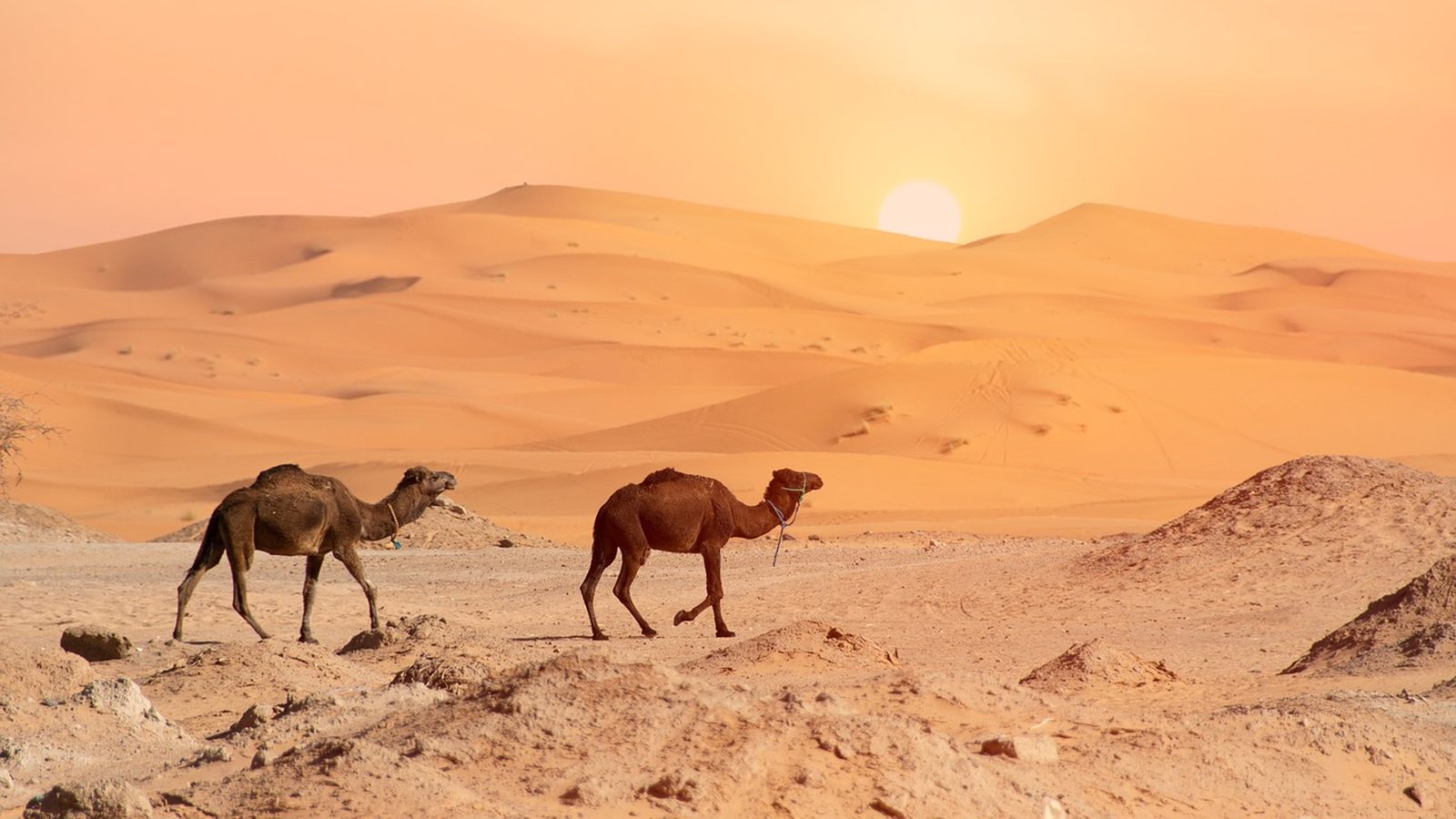
The dunes at the end of the road
Merzouga is a small village on the edge of Erg Chebbi, a sea of tall golden dunes in the south-east of Morocco, close to the Algerian border. People come for the sunset, the silence and a night in a desert camp. It is a wonderful experience, but it is also far from everything, so the journey deserves a proper plan.
How far is it?
As a rough guide:
- From Marrakech: around 550 kilometres, which is roughly nine to ten hours of driving without long stops, often more in practice.
- From Fès: around 450 kilometres, roughly seven to eight hours.
- From Errachidia, the nearest large town and a place with a small airport, about two hours.
These are estimates only, and the real time depends on traffic, weather and how often you stop. Do not try to do it all in one go if you can avoid it.
Two classic routes
From Marrakech, the road crosses the High Atlas through the Tizi n'Tichka pass, passes Ouarzazate, then continues east through the valleys of Tinghir and Erfoud before reaching Rissani and Merzouga. This is the scenic route, with kasbahs, palm groves and canyons. Many people split it with a night in Ouarzazate or in the Dades or Todra area.
From Fès, you cross the Middle Atlas around Ifrane, then the town of Midelt, the Ziz valley and Errachidia, before reaching Erfoud, Rissani and finally Merzouga. Cedar forests and high plateaus replace the palms of the other route. A stop in Midelt or Azrou makes the day easier.
Plan at least three days
A realistic itinerary is three days minimum, including the way there and back:
- Day one: drive to a halfway stop and sleep there.
- Day two: reach Merzouga in the afternoon, take a camel ride or 4x4 outing at sunset and spend the night in a camp or guesthouse.
- Day three: watch the sunrise, then start the long return with a break.
If you have a fourth day, take time to explore the gorges, Rissani market or the oases on the way back.
When to go
Spring and autumn offer the most comfortable conditions. Summer is extremely hot, and the sand can be too hot for walking during the day. Winter days are pleasant but the nights can be very cold. Sandstorms can happen at any time and may affect visibility, so keep some flexibility.
What to pack
- A scarf or light cotton cloth to protect your face and head from sun and sand.
- Closed shoes and sunglasses, plus sunscreen.
- Warm layers for the night, even in warm months.
- A bottle of water and a power bank.
- Cash for small expenses, as cards and network coverage can be unreliable in remote places.
- A small bag for the camp night, so you do not carry all your luggage onto the dunes.
Choosing a camp responsibly
Camps vary a lot, from simple to comfortable. Read recent reviews, compare what is included, and confirm the programme and cancellation terms in writing. Avoid pressure to buy extras, and respect the environment by taking your waste with you and not leaving plastic in the sand.
Safety on the road
- Distances are long and fatigue is a real risk: change drivers and take breaks.
- Fuel stations become less frequent, so fill up in bigger towns.
- Watch for animals and sand on the road.
- The last stretch to some camps is on unpaved tracks, where a local 4x4 or guide helps.
- Tell someone your plan and expected arrival time.
Share the long road with MySeatGO
For a journey this long, sharing the driving and the cost makes a big difference. On MySeatGO, you can post a trip request from Marrakech, Fès or Errachidia towards the south, or find drivers already heading that way. The app is free with no commission and the payment is in cash directly to the driver. Confirm the exact drop-off point before departure.
Plan your trip with MySeatGO
Find a carpool or post your trip in the app.
Comments
Comment in the app
Get the app to comment